Quick summary: What happened at the PNB currency chest in Saharanpur?
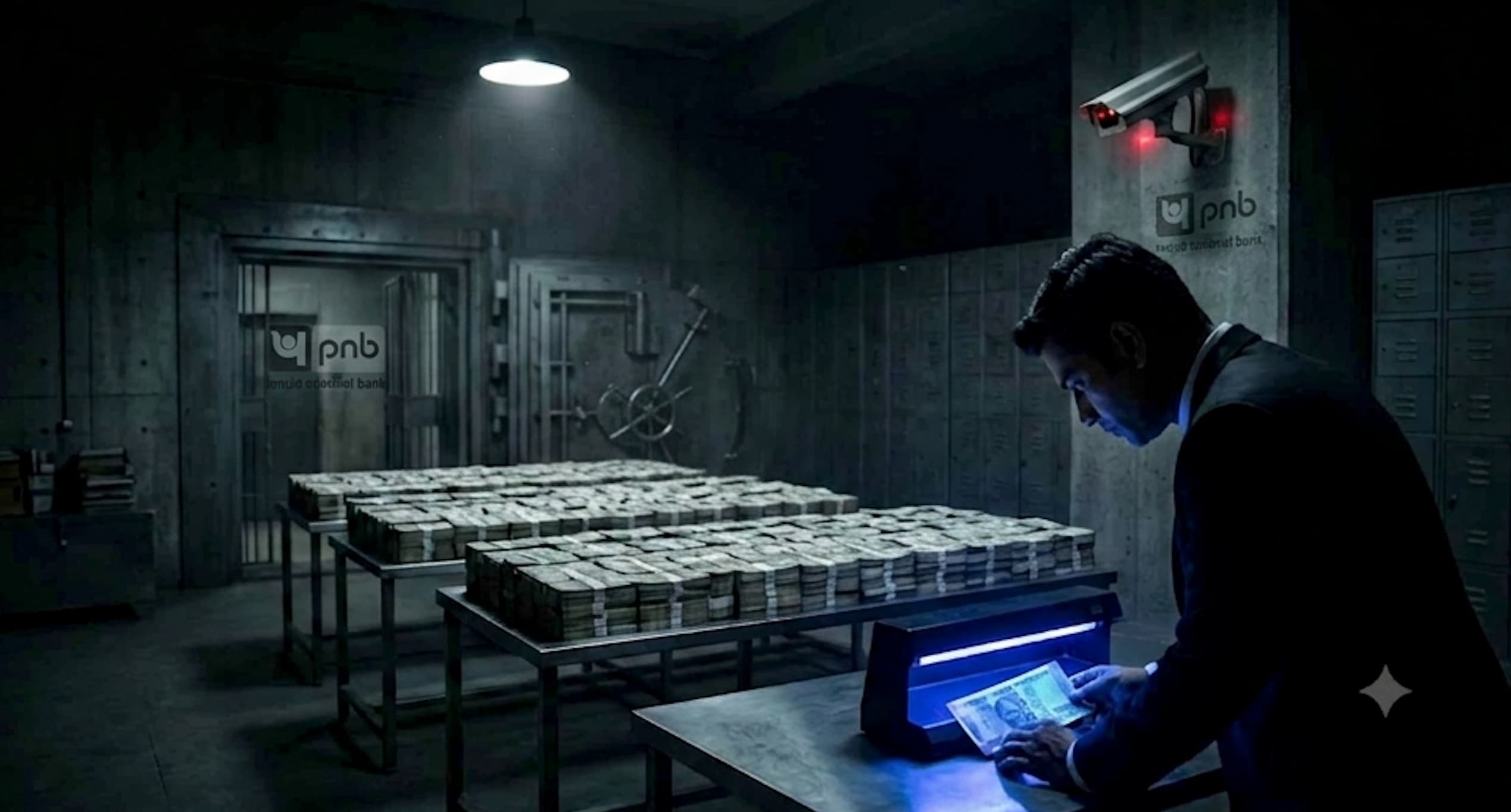
The quiet, bustling city of Saharanpur, Uttar Pradesh, suddenly became the national headlines. The currency chest of Punjab National Bank —a heavily fortified vault designed to hold cash of the Branches for the region was in news. Access was guarded by dual-custody keys, high-definition surveillance cameras, and strict security protocols. Yet, in August 2026, this seemingly impenetrable fortress became the stage for one of the most audacious insider heists in modern Indian banking history.
The unravelling of the conspiracy began not with a grand alarm, but with a small accounting anomaly. On August 5, 2026, the Saharanpur branch dispatched a routine remittance of soiled, damaged, and mutilated currency notes worth approximately ₹11.50 crore to the Reserve Bank of India’s chest in Jaipur. When the cash was put through the rigorous counting machines in Jaipur, a discrepancy emerged: the count was short by a mere ₹4,30,900.
A currency chest is a Reserve Bank of India (RBI)-authorized strongroom operated by a commercial bank on the RBI's behalf. Currency chests store surplus cash, verify and authenticate notes, and periodically remit bundled currency back to RBI regional offices. India has thousands of these chests attached to bank branches nationwide, and PNB — one of India's largest public sector banks — operates several in Uttar Pradesh, including in Saharanpur.Because currency chests handle RBI-owned cash under strict dual-custody rules, a fraud inside one is treated as far more serious than an ordinary bank branch theft. This is the context that turned the Saharanpur PNB currency chest fraud into a national investigation rather than a local police matter.
The Discovery
To the untrained eye, a minor deficit in bundles of mutilated notes might seem like a genuine human error. But to the auditors, it was a loose thread that demanded serious scrutiny. That tiny, seemingly mundane accounting glitch sparked a forensic audit on August 9, 2026, blowing the doors off an audacious breach deep within the Punjab National Bank’s Sophia Market currency chest. As auditors began meticulously checking the stored bundles note by note, the routine inspection turned into a scene of pure disbelief. Deep within the secure vault sat 148 neatly packed bundles. Each bundle was supposed to contain a thousand genuine ₹500 notes. Instead, they were filled with sophisticated counterfeit bills. The initial assessment flagged a staggering ₹7.40 crore in fake currency. As the counting progressed late into the nights, the scale of the deceit ballooned, ultimately resting at an astronomical ₹17.29 crore.
The horrifying reality quickly set in: someone had been systematically bleeding the vault of genuine currency, replacing the real wealth with worthless paper.
The Key Accused
An investigation of this magnitude required a retrospective look at the fort's defenders. How could crores of rupees vanish from a dual-custodian vault without triggering an alarm? The answer lay in the ultimate betrayal of trust—insider collusion. Suspicion immediately fell upon the very gatekeepers of the vault. Senior Divisional Manager Ravi Kumar Kansay, alongside Currency Chest Managers Sushil Kumar Sharma and Amit Kumar, were suddenly thrust from positions of corporate respect into the crosshairs of criminal liability.
The Cinematic twist
When investigators pulled the vault's internal CCTV footage, the narrative took a bizarre, cinematic turn. Captured on camera was Vishal Kumar, a part-time housekeeper tasked with cleaning the facility. The footage showed him handling the bundles, surreptitiously removing currency right inside the inner sanctum of the chest. The illicit operation was neither a movie-style midnight break-in nor an armed raid; it was a slow, deliberate inside swap, replacing genuine Indian currency with counterfeit bills under the very noses of its keepers. The shock deepened when police traced the housekeeper's asset trail. Vishal Kumar officially drew a modest monthly salary of just ₹11,000. Yet, a raid on his residence in Manak Mau revealed that this part-time cleaner somehow owned five houses and an array of unexplained wealth. It was clear he was no lone wolf; he was a vital cog in a highly coordinated mechanism designed to swap the bank's reserves.
The NIA steps in
Recognizing that the systematic planting of ₹17.29 crore in counterfeit bills inside a state bank posed a severe threat to national economic security, the local police's Special Investigation Team stepped aside. The trail led straight up the management chain. Suspicion landed squarely on senior divisional manager Ravi Kumar Kanse, chest manager Sushil Kumar Sharma, and joint custodian Amit Kumar. As Sadar Bazar police registered an FIR under the Bharatiya Nyaya Sanhita, the key custodians vanished into thin air. On September 3, 2026, the central government handed the reins to the premier anti-terror and conspiracy agency: the National Investigation Agency(NIA).
As the agency clamped down, the conspirators scattered. Rumours swirled that the suspended bank managers were attempting to flee across the border into Nepal. A massive manhunt ensued. The NIA scored its first major breakthrough in Chandigarh, tracking down and arresting the absconding manager, Amit Kumar, at his brother-in-law's house.
Disappearance of Adarsh Kataria
Yet, as the high-profile arrests filled the headlines, a darker, parallel mystery began to brew in the streets of Saharanpur. Adarsh Kataria, a 26-year-old driver who spent years transporting the heavy cash consignments between the PNB branches, disappeared. Adarsh had been cooperating with investigators, providing critical logistical information about how cash moved in and out of the Sophia Market vault. After receiving a mysterious phone call summoning him to meet a senior bank official, he left his house and his phone went dead. His desperate family filed complaints, alleging that the powerful fake currency syndicate had abducted the young driver to permanently silence him before he could expose the true depth of the network.
The Probe Continues...
The Saharanpur PNB currency chest fraud remains an active, widening battlefield for the NIA. Investigators are currently tracking the trail of an even larger cash consignment that passed through the region, trying to determine if the counterfeit network extends across state lines into Haryana and Uttarakhand, or if it points to an international syndicate. What began as a routine minor deficit in a routine cash delivery has bared open a terrifying vulnerability in the financial system, proving that sometimes the greatest threat to a bank's vault is not the criminal breaking in from the outside, but the trusted hands operating the locks from within.